Project 01 · Online store
Mittgarn
Mittgarn is an online store for yarn, knitting kits, and patterns. In autumn 2026 I migrated the store from WooCommerce to Shopify and designed a new storefront. It carries nearly 3,900 products — mostly knitting kits where customers pick their own colours and size.
- Role
- Design, development & migration
- Platform
- Shopify
- Launched
- Link
- mittgarn.no
The migration in numbers
- variants across 3,860 products
- 19,043
- product images
- 12,725
- PDF patterns linked to the right variant
- 16,455
- legacy URLs redirected cleanly
- 3,942
01
Starting point
Mittgarn has sold yarn online since 2020. The store ran on WordPress and WooCommerce and had accumulated nearly 4,000 products, thousands of PDF patterns, and six years of orders.
The job had two halves: first move everything cleanly to Shopify without customers noticing any hiccup, then give the storefront a fresh design that puts knitting kits front and centre.
02
The migration
I extracted everything from WooCommerce without touching the live store, then imported it into Shopify via custom scripts against Shopify’s API — products, variants, images, collections, customer accounts, discount codes, and order history back to 2020.
Before launch, I verified price, SKU, and stock count for every single product against the old store: zero mismatches. Every PDF received a checksum so I could verify each file arrived byte-for-byte intact.
Old links kept working: 3,942 WooCommerce URLs redirect to their exact Shopify counterparts so search rankings and external links never hit a dead end, and collection ordering stayed identical.
A dry run caught one nasty trap before import: the app that emails PDF patterns to buyers also sends download links for historical orders when imported. That would have emailed past customers about purchases from years ago. I structured the historical pattern line items so the app ignores them — and nobody received an unexpected email.
03
Knitting kits
A knitting kit bundles yarn and pattern together. Customers choose model, colourway, and size, and the price reflects how many balls of yarn that size requires.
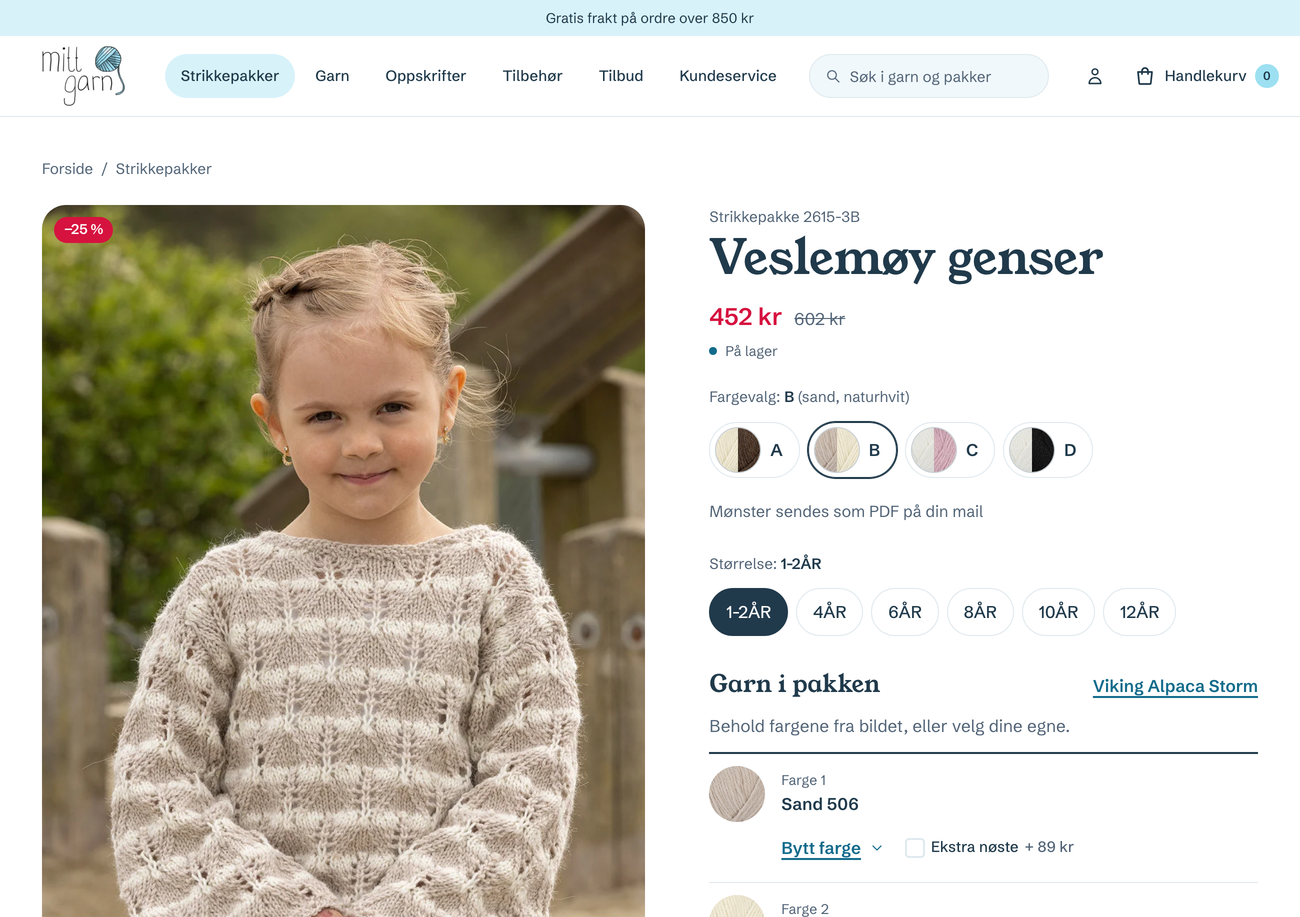
Colours were the tricky part. At migration time, 1,362 out of 2,547 kits used the same yarn across multiple colour groups, so a flat yarn list wasn’t enough. Each kit carries its own colour-group breakdown. Right on the product page, customers can swap colours row by row, add extra balls, and opt for a printed paper pattern.
In the cart, the kit and its extras read as a single item even though Shopify tracks them as separate line items. Colourways A, B, and C swap photos and yarn swatches on the spot on both product and collection pages.
04
Yarn and colours
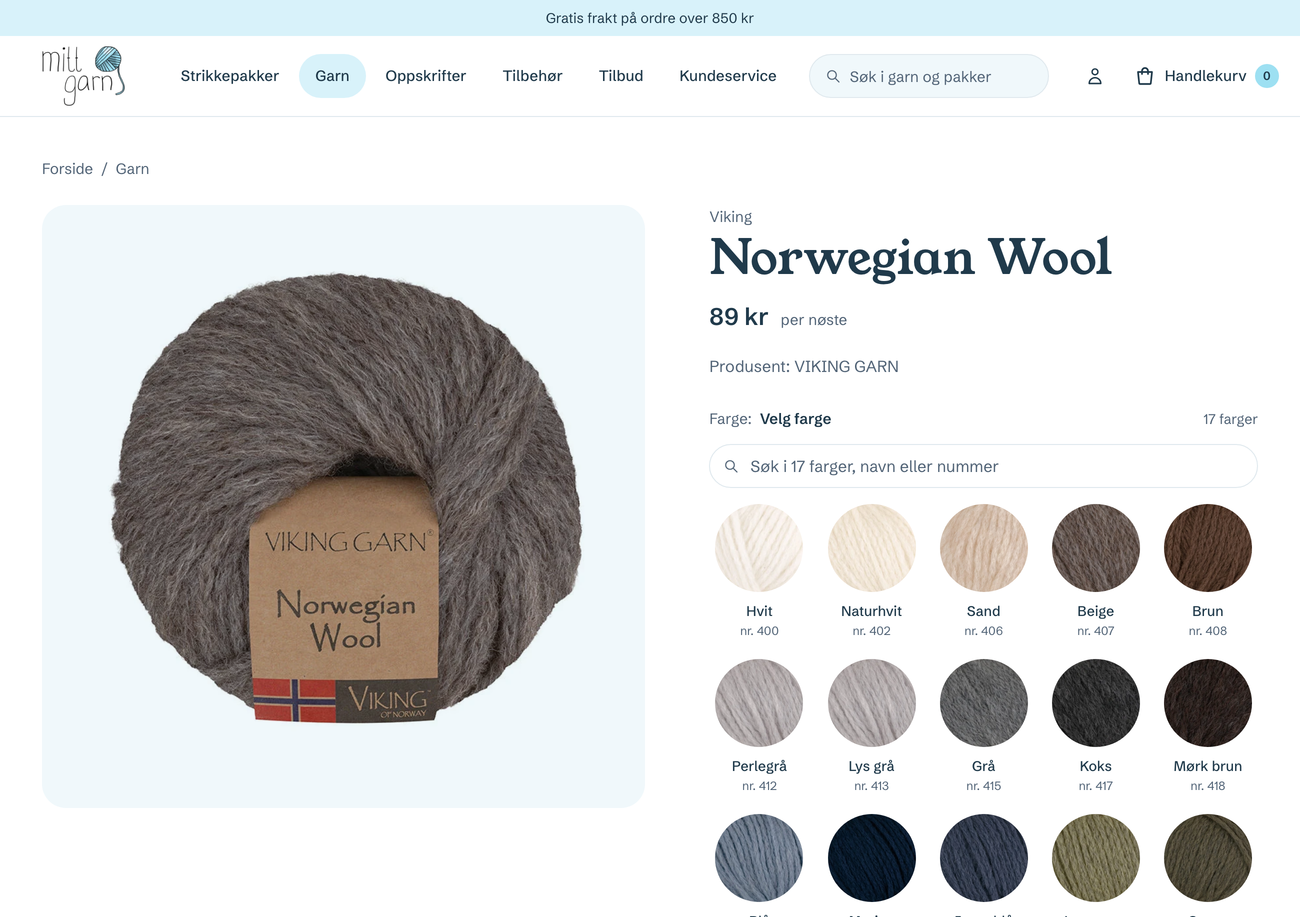
Yarn pages display every shade as a ball swatch with colour name and code. Yarns with dozens of shades get a built-in search input so you can type the exact colour number from the band in your hand instead of hunting.
Fibre content, yardage, needle size, and gauge sit on a banderole modelled after the paper label around a real ball of yarn — parsed directly from existing descriptions so nobody had to re-enter them by hand.
Supplier titles came in all caps with trailing codes like “VIKING – KATHRINE GENSER 2035-1B”. The theme splits them cleanly into brand, name, and code so pages read naturally.
05
The design
The palette comes straight from the logo: a pale yarn blue, a deeper sea blue, and near-black ink for text. Headings use Young Serif and body copy uses Schibsted Grotesk, both hosted directly inside the store rather than loaded from Google.
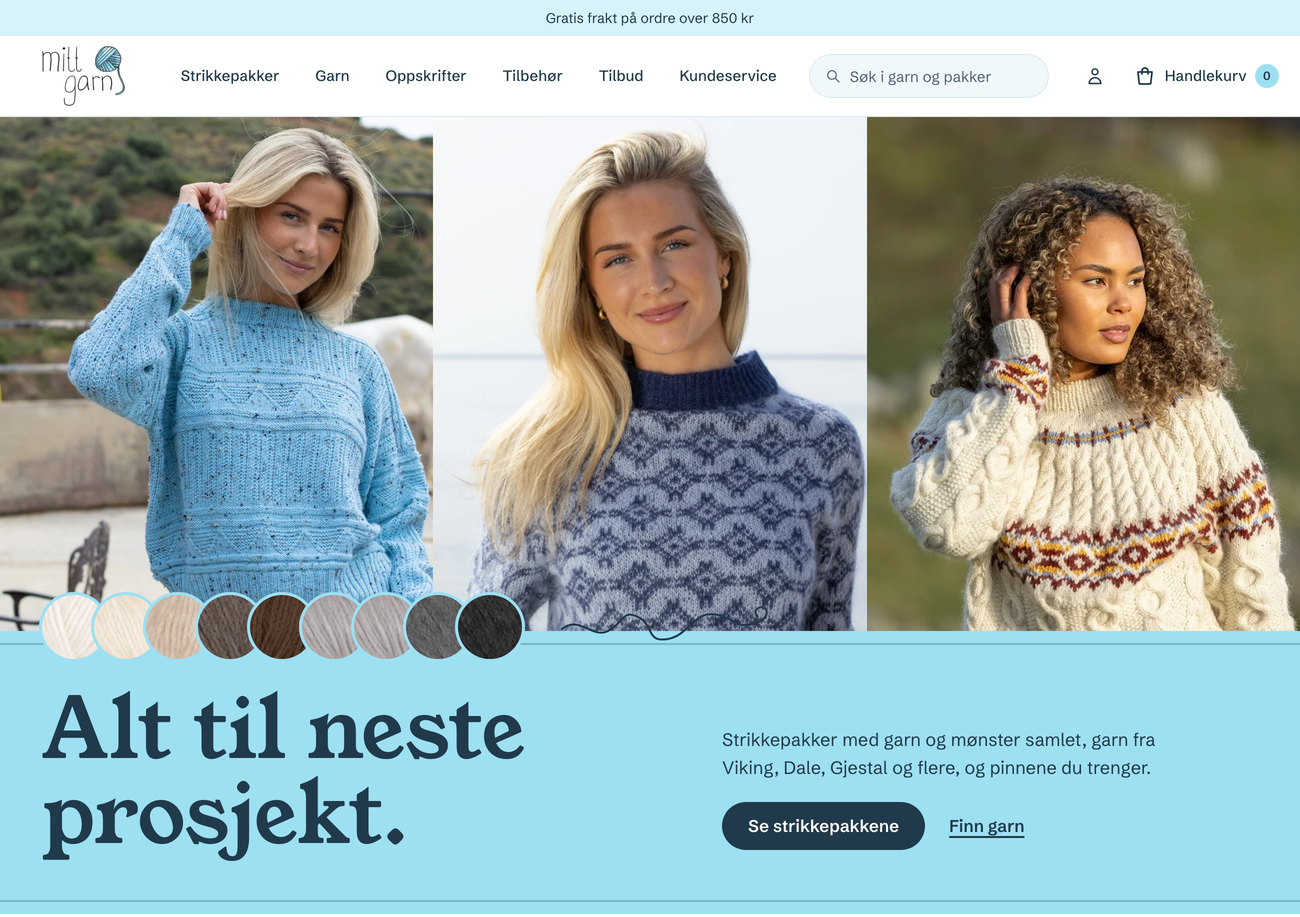
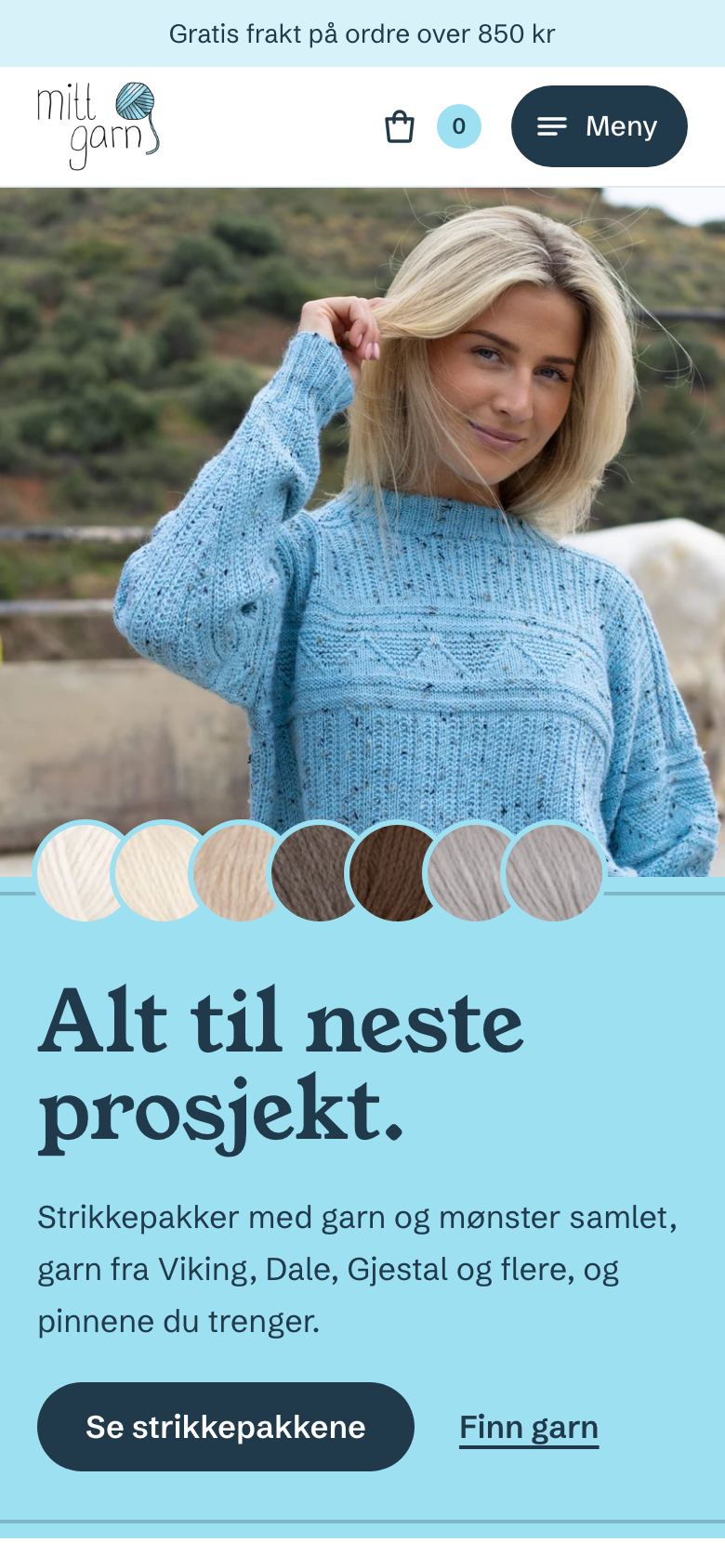
Across the homepage, a blue band stretches over three photos like the paper band around a ball of yarn, lined with real yarn shades and a hand-drawn strand of yarn.
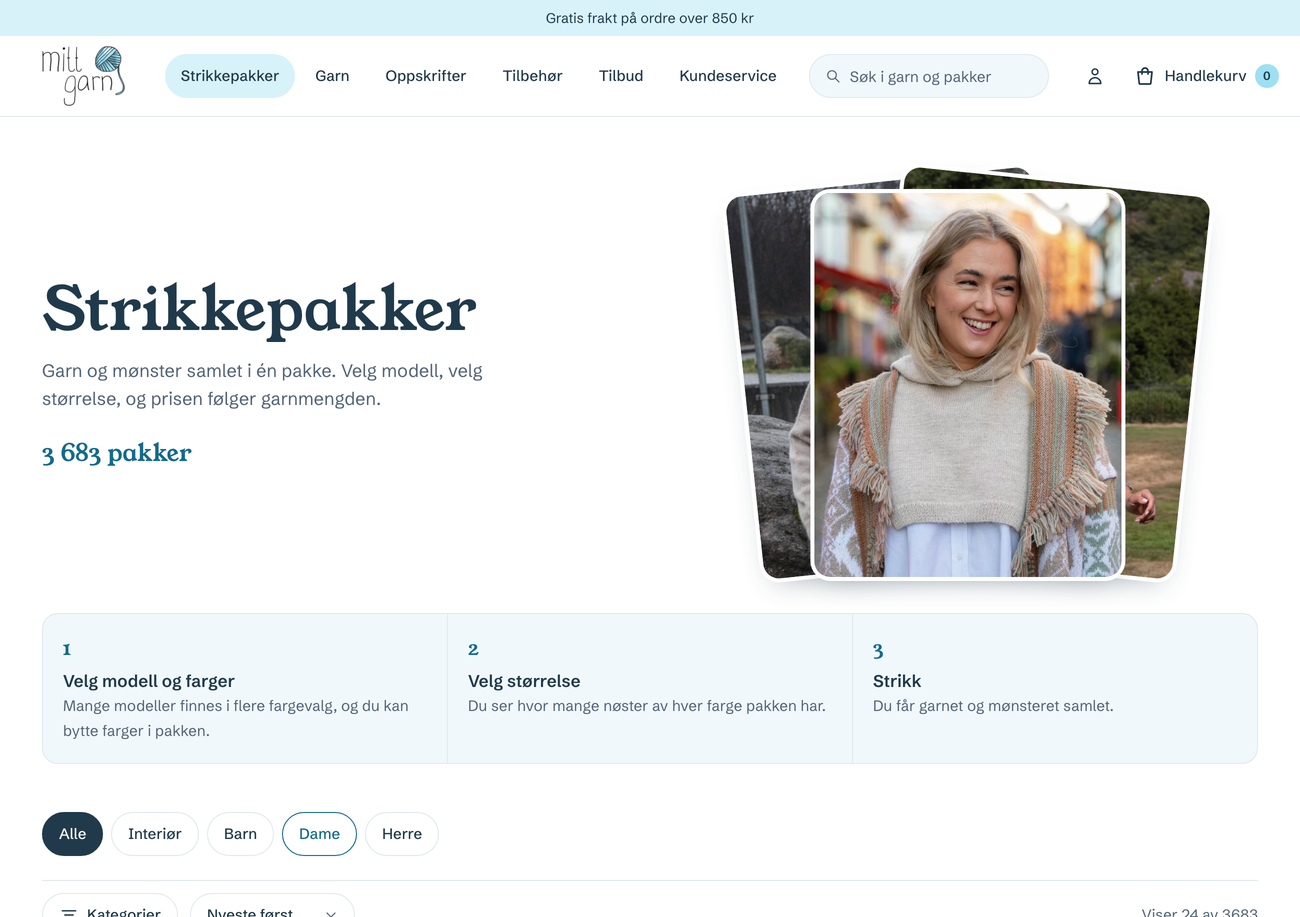
Before writing Liquid, I built the design as a standalone prototype fed with real store data — letting me stress-test it against thousands of knitting kits and long product names before touching Shopify.
06
Under the hood
- Theme
- Custom Shopify Online Store 2.0 theme started from Shopify’s blank Skeleton theme and written from scratch, with 26 sections and 32 Liquid snippets.
- CSS & JS
- Tailwind CSS v4 compiled to a single stylesheet, paired with one small vanilla JavaScript module — no frontend framework. Cart logic has its own tests.
- Speed
- Speculation Rules prefetches pages on link hover and starts rendering on click. Fonts are self-hosted in the store and preloaded, and images serve at screen-appropriate sizes.
- Filters & search
- Native Shopify filters presented as buttons. Load-more prefetches the next page and restores scroll position when going back. Predictive search suggests matches as you type.
- Accessibility
- Skip-to-content link, visible focus states, full keyboard navigation across menus and dialogs, and reduced motion respected.
- Search engines
- Product structured data, canonical URLs, and 3,942 redirects preserving old WooCommerce addresses.
- Checkout
- Vipps, Klarna, and cards through Shopify Checkout. Free shipping over 850 NOK with a progress bar in the cart.
- Verification
- Zero Theme Check errors, plus Playwright scripts walking through the full checkout flow in a real browser.
07
A custom sales tool
Mittgarn runs promotions where different slices of the catalogue receive different discounts — say 20%, 30%, and 40%. I built a custom app right inside Shopify Admin that schedules tiered sales, applies the discounts, and restores original prices once the sale ends.
It needs no external server: it runs as a Shopify Admin extension built with Preact and Shopify Polaris. Because admin extensions cannot run long background jobs, it batches four products at a time and picks up where it left off if someone closes the tab.
Thinking about moving your store?
Send me an email about where your store stands today and what you want it to do. I’ll reply with what a migration involves and what it will cost.
Send an email